Overview

How to unpick Keating’s Legacy that today locks first homebuyers out of property: a user’s guide

By Tim Reardon >>

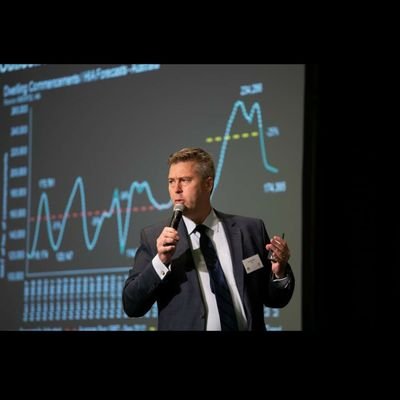
HIA chief economist Tim Reardon responds to the Reserve Bank of Australia’s Financial Stability Review and discusses how the cumulative tightening of macro-prudential settings has increasingly locked first home buyers out of the market.


AUSTRALIA’s financial system is strong. The Reserve Bank has said so again in its latest Financial Stability Review. Mortgage arrears remain low. Banks are well capitalised. Households, despite higher interest rates, are continuing to meet their repayments. This is not a system under stress.

But it is a system that is increasingly locking people out. 

While regulators have been successful in strengthening the resilience of the banking system, they have also fundamentally changed who gets access to housing finance.

Over time, lending standards have become more prescriptive, more uniform and less flexible. Serviceability buffers have increased. Debt-to-income limits have been introduced. Supervisory expectations have narrowed the scope for lender judgement.

Each of these measures can be justified in isolation. The problem is accumulation.

Taken together, they have shifted Australia’s housing finance system away from assessing risk and toward rationing access to credit. And when credit is rationed, it is not allocated evenly. It is allocated by wealth.

Households with existing equity, that own multiple homes and have multiple income streams are rewarded with more credit. Those without these advantages cannot access credit, even when they have the capacity to service a loan.

The result is that first home buyers, younger households, and renters with stable incomes are increasingly excluded from the housing market. Not because they are the riskiest borrowers. But because they are the least wealthy.

This is not a marginal effect. It is now a defining feature of the system. And it creates a feedback loop that policy has so far failed to recognise.

Mortgagors shifted away from first home buyers

When marginal buyers are forced out of the market, the composition of demand shifts. It moves toward more financially secure households, including investors, who are better able to meet prudential thresholds and absorb higher borrowing costs.

This in turn fuels concern about investor activity. Policy makers respond by attempting to restrict investors. But these measures do not remove demand from the system they instead act to restrict the supply of homes, further exacerbating the inequity of the housing market.

In a supply-constrained rental market, higher borrowing costs are passed through to tenants in the form of higher rents. At the same time, first home buyers face a double burden, paying more in rent while finding it harder to access finance.

The system does not become more affordable. It becomes more unequal. There is also a less visible consequence. Competition in mortgage lending has been reduced.

What brought this about? Keating’s legacy lost

Australia’s financial reforms of the 1980s and 1990s, led by Paul Keating, were designed to increase competition and allow credit to flow to borrowers based on their capacity to repay. Lenders were able to differentiate, assess risk, and price loans accordingly.

That flexibility has been steadily eroded.

Today, lending practices are increasingly standardised, not because all borrowers are the same, but because deviation from regulatory norms has become costly to banks. Smaller lenders face higher compliance burdens. Product innovation is constrained. Credit is more likely to be denied than priced.

The system is safer. But it is also less dynamic, less competitive, and less accessible. None of this is to argue for a return to the excesses seen overseas prior to the Global Financial Crisis. Australia avoided those mistakes for good reason.

But there is a growing disconnect between the strength of the financial system and the restrictiveness of the policies governing it. If macro-prudential settings are not eased when mortgage arrears are low, banks are well capitalised and households are broadly meeting their obligations, then it is unclear when they will be.

Policies designed as temporary safeguards risk becoming permanent constraints. And those constraints are not falling evenly. They are falling hardest on those trying to enter the housing market for the first time.

Making a strong system fair

Australia has built a financial system that is unquestionably strong. The challenge now is ensuring it is also fair. Because a system that protects stability at the expense of access does not just manage risk. It entrenches inequality.

A central finding of a recent report by HIA into Macro-prudential restrictions and housing supply is that Australia’s macro-prudential governance framework lacks explicit oversight of cumulative impacts and housing supply interactions.

Regulators are acting consistently and rationally within their mandates, but those mandates were not designed for a housing market characterised by chronic supply shortages.

The report concludes that Australia’s macro-prudential framework would benefit from reform, not relaxation. It calls for:

  • an independent, eminent-person review of the cumulative impact of macro-prudential restrictions on residential construction, competition, and equity of access to housing finance, including pre-2019 measures and Basel-aligned reforms; and
  • amendments to the role of the Council of Financial Regulators to explicitly consider housing supply and equity implications when calibrating prudential settings.

Such reforms would strengthen governance, improve transparency and ensure that Australia’s macro-prudential framework continues to support both financial stability and home ownership.

www.hia.com.au

ends

Weld Australia says Treasurer’s ‘productivity’ quest must first address ‘structural barriers that are quietly eroding output, competitiveness and living standards’

IN AN OPEN LETTER to Federal Treasurer Jim Chalmers, Weld Australia CEO Geoff Crittenden drives home sage advice on how to actually “raise the speed limit” on productivity through practical and necessary structural reforms to the way Australian industry currently operates. Mr Crittenden highlights changes vital to address the “structural barriers that are quietly eroding output, competitiveness and living standards across Australia’s industrial base”. Mr Crittenden says Weld Australia has a unique insight into the challenges facing Australia’s industrial base – its members are made up of individual welding professionals and companies of all sizes. 
He says Weld Australia members are involved, on a daily basis, in “almost every facet of Australian industry and make a significant contribution to the nation’s economy”. One of the major problems Australian industry faces is low-priced and non-compliant lower quality steel fabrications which often require remedial work from Australian builders and manufacturers before installation. Current quality check systems are inadequate to protect against these costly – and sometimes dangerous – steel and alloy products. That is why, Mr Crittenden says, Weld Australia is now in collaboration with the Australian Steel Institute and Standards Australia to establish the National Fabrication Authority (NFA). A pilot NFA-engaged project is currently underway in South Australia.


Weld Australia’s open letter to:

Jim Chalmers MP 
Treasurer of Australia
Parliament House, Canberra ACT

Dear Treasurer,

IN RECENT WEEKS, you have made it clear that the upcoming Federal Budget will focus squarely on lifting Australia’s productivity — on “raising the speed limit” on our economy.

On behalf of Weld Australia and the thousands of businesses and skilled tradespeople we represent across manufacturing, construction and heavy industry, I welcome that focus. 

But if we are serious about productivity reform, we must move beyond rhetoric and address the structural barriers that are quietly eroding output, competitiveness and living standards across Australia’s industrial base.

Because the reality is stark.

Australia’s productivity growth is at its lowest level in 60 years. Growth has stagnated at just 0.5% over the past year, and to reach even 2% annual growth by 2030 (which is still modest by historical standards) we would need to quadruple our current rate.

That is not a cyclical wobble. It is a structural warning sign.

And nowhere is this more evident than in manufacturing.

Manufacturing: a sector under strain

Manufacturing’s contribution to Australia’s GDP has fallen to just 5.1%, a record low and one of the smallest manufacturing footprints in the developed world.

In the year to June 2024 alone, more than 5,100 manufacturing businesses closed their doors. At the same time, the sector contracted by 2.6% over the last year, entering recessionary territory around mid-2024.

These figures are not abstract. They represent lost capability, lost apprenticeships, lost innovation, and lost sovereign resilience.

At the same time, the construction industry presents a productivity paradox. While the number of workers has increased in the past decade, output per worker has reduced. On average, people are working two hours less per year with 25.4% lower output (calculated as construction work completed divided by the number of workers).

For example, worker output in 2023 was $180,100, compared with $196,800 in 2018. With demand for skilled workers continuing to outpace the available supply, greater productivity is key to raising worker output.

This is not primarily a labour problem.

It is a systems problem.

The hidden drag: rework masquerading as productivity

When low-cost imported fabricated steel or structural components arrive on site non-compliant with Australian Standards and must be repaired, re-welded or reconstructed locally, those hours are recorded as economic activity. But they do not increase value. They simply correct avoidable defects.

If a project should require 1,000 labour hours but consumes 5,000 because low-cost imported product fails to meet Australian Standards, that is not productivity. It is inefficiency forced onto compliant Australian businesses.

At a national level, this distorts our productivity performance.

That is not sustainable economic policy.

Compliance is not red tape – it is economic infrastructure

There is a persistent myth that ‘Standards’ and compliance are bureaucratic friction; a cost to be minimised.

In reality, credible conformity assessment is one of the most powerful productivity tools available.

When fabrication is done right the first time, to verified Standard, projects move faster, risk contingencies shrink, insurance exposure falls, lifecycle maintenance costs decline and public asset value is protected.

When compliance is assumed rather than verified, we create false economies; cheaper upfront contracts that become more expensive over decades through remediation, repair and litigation.

For Treasury, this is not merely an industry issue. It is a fiscal discipline issue.

Public infrastructure designed for a 50- or 100-year life cannot deliver value if compliance is declaratory rather than enforced. Whole-of-life costs ultimately land with governments and taxpayers.

If we want to improve national productivity, we must improve first-time-right delivery.

Fragmentation and Licensing: mobility matters

A second structural drag on productivity is regulatory fragmentation. Every state and territory operates different occupational licensing systems, overseen by different authorities and often applying inconsistent competency benchmarks. This limits workforce mobility, increases compliance costs for employers, and slows project delivery.

We support national licensing reform, but only if it is built around demonstrated competency, not paperwork.

In welding, certification aligned to ISO standards allows skilled tradespeople to work across jurisdictions because competency is verified, portable and independently assessed. A national licensing framework for trades should adopt the same principle: assess practical capability, ensure consistency, and eliminate duplication.

Workforce mobility is productivity reform.

Standards and fair competition

The Productivity Commission recently posed the question of whether Australia should abandon national standards in favour of international alternatives. Our view is clear: the idea is not only impractical, but deeply misguided.

The issue is not which Standards we use. The issue is whether they are being consistently enforced, particularly for imported fabricated products.

Right now, many imported fabricated steel components enter the Australian market without meeting any recognised standard, Australian or international. This not only creates a safety risk but undermines compliant Australian businesses that are doing the right thing.

When overseas suppliers compete on price without undergoing equivalent certification, audit and inspection regimes, we do not have a free market. We have regulatory asymmetry.

Compliant Australian businesses invest in qualified supervision, certified welders, quality systems and inspection processes. If competitors are not required to meet the same bar before steel is erected or installed, we incentivise non-conformance.

Productivity cannot improve in a system that rewards lowest upfront price over verified whole-of-life value.

From tick-and-flick to verified compliance

Every state and territory already has regulations requiring fabricated structural steel to comply with Australian Standards.

On paper, the framework exists. In practice, however, compliance too often becomes a tick-and-flick exercise. This is because there is no nationally empowered body responsible for independently verifying that fabricated steel (whether produced domestically or offshore) genuinely conforms before it is erected, installed or incorporated into public infrastructure. In effect, we have rules without a referee.

To address this structural weakness, Weld Australia (in collaboration with the Australian Steel Institute and Standards Australia) has established the National Fabrication Authority (NFA), with a pilot currently underway in South Australia.

The NFA is designed as an independent, not-for-profit certification and inspection body tasked with verifying compliance to Australian Standards for all fabricated steel, whether produced in Dubbo or Da Nang.

Importantly, this is not new bureaucracy layered onto the system. It is targeted institutional capability; the verification function our regulatory framework currently lacks.

If productivity reform is about removing structural drag from the economy, then closing the gap between regulatory intent and enforceable compliance is a logical starting point.

Standards without verification are aspirations. Verified compliance is productivity infrastructure.

What the Budget must address

If this Budget is to genuinely lift productivity, it should focus on structural enablers, not just stimulus measures. Specifically:

  • Commit to national trade licensing reform based on competency and portability.
  • Strengthen enforcement of compliance for fabricated structural products, domestic and imported alike.
  • Align procurement frameworks to recognise verified conformance and whole-of-life performance, not just headline cost.
  • Support industry-led certification systems that provide auditable, internationally recognised competency assurance.

These are not protectionist measures. They are productivity measures. They reduce rework. They protect public capital. They strengthen sovereign capability. They allow local businesses to invest with confidence.

A final thought

Australia cannot tax its way to prosperity. Nor can it subsidise its way to sustainable growth.

We must build our way there.

That means ensuring that every hour worked generates real value, not duplication, remediation or regulatory confusion.

It means enforcing quality rather than assuming it.

It means aligning national systems so skills are portable, standards are credible, and markets reward compliance.

If we want to lift the economic speed limit, we must remove the structural drag.

Weld Australia stands ready to work constructively with Treasury to advance reforms that deliver measurable, durable productivity gains.


Yours sincerely,

Geoff Crittenden
CEO, Weld Australia  www.weldausralia.com.au


ends

Empowering under-represented groups in franchising is key to Kwik Kopy success

INSIGHT  By Sonia Shwabsky >>

IN A COUNTRY as proudly multicultural as Australia, the diversity of lived experience across our workforce is one of our greatest national assets.

At Kwik Kopy, I’ve seen first-hand how individuals from all walks of life – different cultures, career backgrounds, genders and life stages – can thrive as franchise owners when given the right support and opportunity.

While debates on diversity, equity and inclusion (DEI) continue to swirl globally – fuelled by recent policy shifts in the US – in Australia, the numbers speak for themselves.

Over 40% of franchisees are born overseas, and close to 30% of franchise businesses are owned by women.

These aren’t just statistics; they’re proof that underrepresented groups are already driving success in franchising, and the smart money is on amplifying that momentum. 

The business case for inclusion

We don’t view DEI as a tick-box exercise– it’s an enabler of growth. Research from the Australian HR Institute shows a troubling gap between intent and action in corporate DEI strategies.

Just 50% of HR professionals believe their leaders treat DEI as a priority, despite clear evidence that diversity drives business performance.

At Kwik Kopy, our “can do” culture empowers people to take the leap into business ownership, regardless of background or prior experience. We back ambition with structured support, and the results speak volumes: higher retention, broader innovation, stronger team culture and a more representative business landscape.

As a woman who has built her career in male-dominated industries, I understand the barriers – and the importance of breaking them down. My journey wasn’t linear, but with resilience, mentorship, and opportunity, I found my path to leadership.

Now, I’m committed to helping others do the same.

Making franchising accessible – for everyone

One of the biggest myths about franchising is that you need prior industry experience to succeed. At Kwik Kopy, we bust that myth every day.

Our onboarding program includes up to four weeks of comprehensive training across operations, marketing, technology and sales – delivered in-person, online, and on-site. We continue that support through regional meet-ups, national conventions, peer connection and continuous learning via our Kwik Kopy Academy.

Just as important as the technical training is the human support. Our team works alongside every franchisee, not only to help them launch and grow their business, but to foster collaboration through feedback loops, peer learning and national campaigns.

Whether it’s HR support, marketing strategies, or tools like CRM and e-commerce systems, we equip our franchisees with everything they need to succeed – no matter where they start.

Celebrating migrant success stories

One standout example is Kervin Merchant, who joined Kwik Kopy Blacktown in 2018 after moving from New Jersey with roots in India. Seeking a new career that aligned with his lifestyle and values, Kervin embraced the opportunity and now leads a million-dollar business.

His story is far from unique – many migrants bring adaptability, ambition and grit that make them natural entrepreneurs. But the key to their success lies in access to the right systems and mentorship.

Research from the Centre for Policy Development confirms this: refugees are the most entrepreneurial of all migrant groups in Australia. Yet, too often, they’re overlooked in mainstream business channels.

As leaders, we have a responsibility to change that – not just because it’s the right thing to do, but because it’s smart business.

Building the future of franchising

Creating a truly inclusive franchising environment means more than just opening the door – it means walking alongside new owners, providing tailored training, clear pathways to leadership, and fostering a community where people feel they belong.

At Kwik Kopy, that means structured support for work-life balance, flexible ownership models, leadership development opportunities, and tools to build confidence in marketing, sales, and customer experience. We’re not just growing businesses; we’re growing people.

Australia’s diversity is a competitive advantage we’re only beginning to unlock. With more than 7 million people born overseas, there’s an untapped well of talent, resilience and entrepreneurial spirit ready to contribute to our economy.

It’s up to us – as business owners, mentors, and leaders – to recognise that potential, offer the platform, and back it with the training and belief people need to succeed.

Franchising, at its core, is about empowering individuals to own their future. And when we bring everyone to the table – women, migrants, career changers and those who’ve been historically overlooked – we don’t just build better businesses. We build a better, more inclusive economy.

Driving change through leadership and representation

True inclusion is also about visibility. When aspiring business owners see people who look like them and share similar backgrounds or life experiences succeed in leadership roles, it sends a powerful message: “You belong here.”

That’s why representation matters at every level of franchising, from frontline operations to boardrooms and strategic leadership. At Kwik Kopy, we actively work to elevate diverse voices through mentoring programs, leadership pipelines, and inclusive recruitment strategies that challenge the status quo.

We also know that financial barriers can often stand in the way of underrepresented groups entering the franchising space. That’s why we explore flexible entry options, funding partnerships, and support structures to help people overcome the initial hurdles of business ownership.

Affordability should never be the gatekeeper to talent and drive.

Inclusion isn’t a final destination – it’s an ongoing commitment. It means listening with empathy, staying open to feedback, and continually evolving our systems to meet the needs of our franchisees.

As the business landscape shifts, so too must our approach. The future of franchising will be shaped by those willing to challenge conventions, embrace diversity in all its forms, and create business ecosystems where everyone has a fair shot at success.

When we empower more people to participate fully in the business world, we don’t just strengthen our own networks – we help build a more resilient, innovative, and future-ready economy for Australia.

And that’s a win for all of us.


About the author

Sonia Shwabsky is the CEO of Kwik Kopy Australia. Ms Shwabsky won the role based upon her leadership experience across a range of industries, including 10 years transforming the iconic Australian King Gee workwear and uniform business. She joined Kwik Kopy from the role of chief growth officer at rival franchise operation Snap Print and Design. Ms Shwabsky has also founded two businesses and been a franchisee, bringing hands-on experience and understanding of how to create and build successful small businesses for Kwik Kopy’s franchisees. Ms Shwabsky has also recognised for her ability to incorporate innovative management techniques and people skills to create enhanced business practices, increased productivity and profits. www.kwikkopy.com.au


ends


Australia must ‘construct’ better living standards

OPINION by Jon Davies >>

EVEN BEFORE the starting gun had been fired on the race to The Lodge, it was clear that, with an electorate struggling to make ends meet, both main political parties will seek to portray themselves as the party best able to reduce the cost of living.

Recently announced initiatives like rebates on electricity bills and increased bulk billing of GP visits are obvious ways to do this but what about improving the productivity of the construction industry? 

While this is unlikely to appear in any election manifesto, it should be a focus of whoever is elected if they are serious about improving living standards. 

Living standards depend on two key factors: wages and the cost of goods and services. Employers can only increase wages without raising prices if workers become more productive.

Re-building genuine productivity

In construction — one of Australia’s largest industries — productivity has stagnated for decades. The construction industry is the nation’s fourth largest employer, with 17% of all Australian businesses employing over 1.3 million people and generating almost 8% of gross domestic product (GDP).

But according to the Australian Bureau of Statistics (ABS), construction is now less productive than it was 30 years ago. Compared with other major industries, its productivity growth in that time lags by more than 30%. That lost efficiency costs the economy over $60 billion a year.

Closing this productivity gap would wipe out current labour shortages impacting the building of new houses and substantially reduce the cost of the new office buildings, warehouses, transport and power infrastructure that all contribute to the cost of goods and services. It would also help the government to pay for the power rebates and increased bulk billing.

What can the (Labor or Coalition) Federal Government do?

So, what role can the Federal Government play in making the industry more productive? Whilst, with a few exceptions, it doesn’t directly procure construction services, it is uniquely placed to improve the efficiency of how this is done. The following are just a few suggestions.

The appointment of an administrator to manage the affairs of the industry’s largest construction union should see an end to the coercive control of construction activities for personal rather than project gain. But to prevent history from repeating, any new government must prioritise long-term industrial relations stability based on achieving common interests.  

As an example, a modern version of the Hawke-Keating Prices and Incomes Accord – uniting government, industry and unions – could drive a shared commitment to improving productivity.

In terms of bringing people together, the Commonwealth could also work with the states to harmonise the recognition of construction skills and qualifications allowing the free movement of labour across country to areas of high demand.

As far as possible, designs for key pieces of infrastructure such as schools, hospitals, prisons and electricity pylons could be standardised across the country and investment in offsite manufacturing facilities underwritten through stable pipelines of work.

Use data to bring projects in on time and budget

The construction industry could be incentivised and supported to use the vast amounts of data it produces to improve the accuracy of project budgets, reduce re-work and identify opportunities for improvement rather than just being used to substantiate claims for additional time and cost.

Procurement rules focused on achieving true value for the taxpayer, rather than the illusory value of a cheap tender price, would create a race to improve project outcomes instead of a race to the bottom to undercut each other and take on unpriceable  risk.

These are just a few suggestions because the construction productivity tree is groaning with low hanging fruit. All that is missing is a committed farmer willing to start picking.

That farmer has to be the Federal Government because history has shown that there are too many barriers and too few incentives for anyone else to be successful at scale.

Moving in the right direction?

There are encouraging signs of this starting to happen. The Department of Infrastructure is leading an initiative to develop a national construction strategy designed to improve productivity in the construction of transport infrastructure projects and the Department of Workplace Relations, through the National Construction Industry Forum, is developing a blueprint for a more sustainable and productive industry, but this is just a start and there is a risk that any new government might not continue this work.

Given the size of the prize, whoever forms government must make construction productivity a priority.

Maybe it’s a Department for Construction Efficiency or maybe it is just a coordinated, strategic focus across government.  

Without it, the cost of homes, infrastructure and essential services will continue to rise and Australians will keep paying the price through declining living standards.


About the author

Jon Davies is the CEO of the Australian Constructors Association, the only representative body for contractors delivering vertical and horizontal construction projects, as well as undertaking infrastructure asset management. Mr Davies said  his organisation’s members construct and service the majority of major infrastructure projects built in Australia every year. The association’s goal is to create a more sustainable construction industry.

www.constructors.com.au


ends

Success isn’t about labels – it’s about mindset

IN MY EXPERIENCE >  by Fran Chalmers, MediaCast managing director >>


IN THE LEAD-UP to International Women’s Day, I had been reflecting on my own success as a business owner and whether or not being a woman has played a role in my success.

Truthfully, I don’t know that it has… and I’d love to tell you why.  

I fundamentally believe that success isn’t about circumstances, labels, or external validation — it’s about persistence, adaptability, and making the tough decisions at the right time.

Reflecting on my career so far, I realise that some of the most important lessons I’ve learned had nothing to do with being a woman in business, but everything to do with the mindset needed to build something that lasts.

Building something that matters

When I first started my agency, I wasn’t thinking about breaking barriers or defying expectations. I was thinking about how to create a unique offering, deliver value, and build something that mattered.

My business hasn’t achieved success because of who I am — it succeeds because I have a strong vision, a willingness to take risks, and an unwavering commitment to hard work.

There’s a tendency in today’s world to define success through external factors — gender, background, or industry norms. But in reality, success is built from the inside out.

It’s about resilience in the face of setbacks, the ability to pivot when challenges arise, and a relentless focus on growth. It’s about making smart decisions, surrounding yourself with the right people, and never settling for mediocrity.

Focus on the challenges

Looking back, I see that the key moments in my career haven’t been shaped by being a woman in business, but by how I approach each challenge.

Early on, I worked in the automotive industry, an environment where men vastly outnumbered women. But instead of seeing that as an obstacle, I saw it as an opportunity to learn, grow, and prove myself through the quality of my work.

When I co-founded my agency (MediaCast), my focus wasn’t on how my gender might impact my success—it was on how I could build something innovative and enduring.

As MediaCast marks its 10-year anniversary, I’ve been reflecting on what it takes to sustain and grow a business in an ever-changing industry.

The most valuable lessons I’ve learned apply to anyone looking to achieve success, regardless of background:

  • Adaptability is everything. The landscape is always shifting, and the most successful people are those who can evolve with it. Staying rigid in your thinking or approach will only hold you back.
  • Surround yourself with the right people. Success isn’t a solo journey. Finding business partners, mentors, and collaborators who challenge and complement you is critical.
  • Take risks, but make them calculated. Every opportunity carries some level of risk, but success comes from making informed, strategic decisions.

At the end of the day, success isn’t about labels—it’s about mindset. It’s about the choices you make, the habits you cultivate, and the determination you bring to every challenge.

And that’s a message that applies to everyone.

www.mediacast.com.au


BUSINESS ACUMEN IN ACTION

To illustrate how Fran Chalmers and her team faced – and reacted to – many challenges MindCast dealt with over the past decade, Business Acumen asked her to list the more significant ones. Business owners and leaders will recognise and identify with many of these challenges – and ask the obvious question: ‘How would I proceed in a similar situation?’ 

Year

Challenges

Milestones

2015

Setting up the business in a new market!

Founders Fran Chalmers and George van Velzen relocated from London to Brisbane to establish MediaCast. They built their client base from scratch, learnt the Australian media landscape and built a custom CRM, CMS and NewsWire to streamline campaign delivery.  

MediaCast’s signature Radio Day offering was incredibly unique and offered a service that didn’t exist in the Australian PR landscape.

MediaCast gained traction by offering pro bono campaigns to NFPs to gain experience, generate referrals and build brand awareness.

2016- 2017

MediaCast needed to capture more of the market and expanded to become a full service agency offering project services across radio, TV, print and digital.

This new offering opened doors to more clients looking for one agency to do it all.

MediaCast became known for their broadcast specialism as well as their signature ‘All Four’ campaigns targeting radio, TV, print and digital outlets. MediaCast also established themselves as leaders in research driven PR, with consumer research projects becoming a staple within the business.

2018- 2019

Time to start scaling! MediaCast grew the team and moved into bigger premises to accommodate a now team of five.

MediaCast won the 2019 PRIA Golden Target Award for Small Budget Campaign for their work with Act for Kids.

2020

Covid-19 pandemic hits, global lockdowns and fear during the pandemic resulting in budgets being pulled and agreements cancelled.

Pivoted to support our staff to WFH, supported our clients with revised strategies to ensure cut-through in an unknown landscape, prioritised securing new retainers to strengthen our business.  

2021

MediaCast grew the team again and moved into even bigger premises to support rapid growth.

As the team grew, the priority turned to professional development to upskill the team and establish solid processes.

MediaCast won the 2021 PRIA Golden Target Award for Public Affairs and Advocacy for their work with the Immunisation Coalition, advocating for the flu jab and covid vaccine to be given to seniors concurrently.  

2022-2023

Post-covid, hiring staff was a challenge across the industry.

With a relatively new team, MediaCast continued to prioritise professional development and ensure they are positioned well in the employment market by introducing a range of talent incentives such as referral and loyalty bonuses, birthday leave, commissions and more.

MediaCast was one of the first agencies in Australia to offer IVF fertility leave and paid pregnancy loss leave.

In addition, they commercialised their cloud-based PR software and launched BUZZHub to help other agencies improve their own efficiency.

2023-2024

The landscape is shifting – global political unrest and local government uncertainty impacts client spending. MediaCast increased business development activities to maintain agency growth.

MediaCast ceased renting and purchased an office, completed a stylish, ergonomic fit-out for the team including an in-house studio.

The team won the PRCA APAC Campaign Award for Diversity, Equity and Inclusion for their work with the Tourette Syndrome Association of Australia.

2025

To broaden revenue streams, MediaCast developed an extended videography offering for key metros to support clients PR and marketing activities with professional visual assets.

Celebrating 10 years of MediaCast.

MediaCast has recently been shortlisted for three PRCA APAC Awards.


#ends

Why is Australia trailing Canada in key innovation metrics?

By John Sheridan, Digital Business insights >>

CANADA LEADS Australia in economic complexity – 41st to 93rd – and also with knowledge diffusion – 41st to 72nd.

Which is interesting. But probably not that surprising.

Australia and Canada are both neck-and-neck for knowledge creation – Canada 16th and Australia 17th, but when it comes to sharing knowledge, Canada is 41st and we are 72nd.

We are similar sized countries, both reliant on mineral exports and agriculture to a lesser extent.

But Canada has a bigger population – 40 million, to Australia’s 27 million, and has over 100 universities to Australia’s 42.

And Canada still has a car industry, where Australia made one of the worst decisions ever and closed our car industry down. Weakening our manufacturing sector considerably.  [Editor’s note: Tony Abbott was Prime Minister at the time of this decision].

Rebuilding a manufacturing economy is hard. Rebuilding economic complexity is hard.

And we are not going to do it without becoming a lot better at knowledge diffusion – sharing the knowledge that we create. 

Poor at sharing knowledge

Canada and Australia are both good at creating knowledge, but Australia is bad at sharing it.

We must do better.

We know that knowledge diffusion would help the country considerably. The Productivity Commission spelled that out in 2022:

“While novel, ‘new-to-the-world’, innovation is an important source of economic performance, it relates to only one to 2 percent of Australian firms. The slow accretion of existing knowledge across the economy — diffusion — is often overlooked as a source of productivity. It has the scope to lift the performance of millions of businesses.” – Productivity Commission, 2022.

We must take action

We need to do three things to improve our situation.

1: We need to share knowledge effectively and strategically and remorselessly. Share the knowledge generated in our universities with SMEs and high schools across the country.

Our underfunded universities, need to do what they can to share the innovations and ideas generated within, that could be useful to SMEs across the country. SMEs don’t know what they don’t know. So, we need to orchestrate knowledge diffusions and not just hope for the best.

We do a lot of ‘hoping for the best’ in Australia, but don’t take much action to achieve it.

We know what all the issues are. But we do little to fix them.

2: We need to share knowledge with our startup incubators to provide them with ‘market intelligence’ helping them to better target their innovations and ideas. Customer interest. Competitive advantage.

There are incubators across the country all doing their best to help and support the startups that have “good ideas”. But if we are going to get serious about supporting innovation in this country, we have to improve the model.

We need to share market intelligence nationally. We need to share a better understanding of where Australia could compete. Of where Australia intends to compete.

What is the vision and direction for the economic rebuild? 10 years? 20 years?

We are not just good at selling iron ore and coal. We could also export many other products and services to the world. What does that ‘map of possibility’ look like?

Nobody knows.

There should be a clear vision of that national goal in every business, high school and university across the country.

3: We need to approach innovation in the same way we approach sport in this country. Go for gold. Lots of it.

We need to share case studies of the journey to success. Ask our leading innovative businesses “Who are you?  What do you do?  Customers? Why you began? (What problem did you solve) Reasons for success?  What next?”

We can all be inspired by the story and example of what our successful businesses have achieved. And learn from the example of how they achieved success.

Go for gold, properly

If we managed our sporting potential in the same way we manage our incubators, we would expect that putting a few dollars into sports clubs across the country from time to time is all that it takes to generate and support gold medal winners at the Olympics.

That would be absurd of course. We use the sports clubs as the nurseries for sports potential, but we then select the real potential though competitions. We pick winners. And then nurture them through more competition, and finally through coaching and sports institutes.

We need to do the same with business. Catalyse innovation at the ‘grass roots’ and then pick winners for the ‘Australian Institute of Innovation’ to rebuild the economy and maximise the number of ‘gold medals’ at the ‘Export to the world Olympics’.

We have the brainpower in our universities.

We have the design, branding, coaching and training skills across the country. But all isolated. Insular. Parochial.

Rather than Collaborative. Holistic. Expansive.

It is time to get serious in the way we deliver.

Stop hoping for the best.

Move beyond planning for the best.

Start ‘being’ the best that we can be.

Because we have it all here. The brainpower. The mineral resources. The potential.

We just need to start sharing, collaborating and rebuilding.

93rd is not good enough.

72nd is not good enough.

We can head towards number 1.

Starting today.


About the author

John Sheridan is the CEO at Digital Business insights, the company behind the creation of the Regional Economic Development (RED) Toolbox and myRegion Australia. The RED Toolbox has been steadily developed over the past 12 years to provide a collaboration platform for Australian economic development, including a range of showcases that promote national and international trade opportunities and connections. Its latest iterations have adopted the brand myRegion and work closely with regional development authorities nationwide.

ends

Workforce productivity: what does it mean in a world driven by digital technology software AI and robotics?

OPINION by John Sheridan, Digital Business insights >>

FORMER TREASURY BOSS Ken Henry said, “something is desperately wrong” with Australia’s economy, which is beset by “structural deficiencies” that cannot be fixed by interest rate cuts or government largesse.

Dr Henry argued the main reason productivity was declining was a lack of business investment in new technology and equipment that increased the efficiency of the workforce.

“Business investment today as a proportion of gross domestic product is almost as low as it was in the depths of the early-90s recession,” Dr Henry said.

“The reason why Australia celebrates a current account surplus today is because business investment is so weak. We should not be celebrating this. This is sending us a signal that there is something desperately wrong in Australia.”

Something is desperately wrong in Australia. 

Not enough investment in new technology. Software, robotics, automation, AI. The tools that extend ‘arm, eye and brain power’ to help us achieve more.

It’s not about people working harder or longer, it’s about people working smarter using the 21st century tools we now have, with them focused on our productive industries.

Our productive industries

Our productive industries are: manufacturing, agriculture, smart trades, mining, professional services, ICT, creative industries, education, media and communications.

Most of the other industry sectors are service and support industries for our productive industries. They help and catalyse the production of goods and services. But they don’t make them.

Of the 13.5 million Australian workforce, our productive industries represent roughly 4.5 million workers across eight industry sectors. These are the industries that generate wealth and exports, providing a platform for future prosperity.

The demand for more ‘productivity’ is regularly delivered by the Business Council of Australia and a variety of business spokespeople, and used to criticise the Australian workforce as a whole, claiming they need to be more productive to justify wage increases.

But statements like these do little to advance solutions to the issues Ken Henry rightly outlines.

There are two things to consider.

One is the lack of business investment in new technology. And the other more nuanced issue stems from what productivity is, how it is measured and what it means in today’s digital economy where well over half the working population is not involved in the production of wealth creating goods and services anyway.

We don’t live in the 19th century any more. We don’t all work in factories, mills, farms and building sites making things to be bought and sold.

Few of us write books, plays, films and software, paint, design and create. 

Most of us don’t dig holes in the ground or drill for oil and gas.

What the majority of us do is service and support workers in productive industries as best we can. 

Productivity shouldn’t be the only goal

In many cases, increased productivity can be viewed as counter-productive.

How do we make teachers more productive? Bigger classes?

How do we make musicians more productive? Bigger audiences?

How do we make politicians more productive? Longer speeches?

How do we make nurses more productive? More patients?

Doing more isn’t always a good thing.

According to the Productivity Commission, “Productivity is a measure of the rate at which output of goods and services are produced per unit of input (labour, capital, raw materials, etc.)

“Productivity is a measure of the efficiency of a person, machine, factory, system etc., in converting inputs into useful outputs.”

A useful definition for the industrial revolution. Not so useful now.

The ABS calculates productivity using a measure of output called gross value added, which is the value of the output produced by the firm minus the intermediate inputs used (materials, services and energy used in production).

But what factors do you include in your multivariate data analysis that make real sense today?

What is ‘labour productivity’ in the middle of a digital revolution when many tasks and even job roles are fulfilled by software and technology in its many forms.

While we continue to accept these definitions as ‘truths’ we will continue to suffer the impacts of the malaise Ken Henry rightly outlines. 

Work harder and you will get more pay

The intrusion of software into every aspect of our economy makes nonsense of the measure of input. 

Estimates of productivity are increasingly pure guesses from the ranks of ‘economists’ cloistered within a variety of government institutions. Emperor’s new clothes.

How does anybody credibly measure the impact of software on our economy, given its multi-national, interconnected and integrated role not just in single organisations but across sectors and supply chains, and its role in information exchange between organisations of all kinds?

Software increases efficiency. It also automates many activities, processes and functions that historically were performed by a person and measured by hours worked and outputs per hour.

And once you add the automation of physical tasks and the management and control of machinery through software and robotics, the issue of measurement becomes more confused. 

Inputs and outputs can be measured, but what role does a person play in that equation to be rewarded for increased productivity by employers? In fact, removing the person makes measurement easier.

Add the automation of software (artificial intelligence, AI) into the mix and we will diminish the role a person plays in outputs even further.

Where does the work take place in an increasingly interconnected and integrated world?

In the data centre? On the device? What is the input? Where is the output? Ask the tax office. They don’t know either.

Where do we deliver the increase in wages for increased productivity? To the robot? To the AI? To the software developer? To Google? To Microsoft? To Amazon?

This conundrum will become even more complicated over the next decade and beyond.

We lack the tools to measure what is happening. We lack the means to understand it. Or control and manage it. Which is a problem. Who is ‘steering the ship of state?’

It is the 21st century not the 20th any more, and our thinking needs to match the changes imposed by the digital revolution not lag light years behind.

Government always lags technological change. And the government organisations that should be serving our interests, aren’t. And can’t.

It is not their fault. That is just the way it has always been.

The Productivity Commission. Jobs and Skills Australia. The ABS. And all departments of industry and development. They follow technology developments. They don’t and can’t lead.

By default, direction for government is offered by ‘big tech’ and consultants of many flavours. It’s one of the reasons government spending on consultants has gone through the roof.

Single business productivity growth

For single businesses it is an easier proposition.

For single businesses, productivity growth is important because providing more goods and services to customers translates to higher profits. As productivity increases, an organisation can turn resources into revenues, paying stakeholders and retaining cash flows for future growth and expansion.

The result of adding more software into the business mix can be measured. But as technology is incorporated, allocating reward becomes more difficult. 

Is it the person or the software? Does it matter?

In the crudest way, we know that bringing more technology and software into a business reduces bottom line costs – wages. Organisations can be leaner and meaner. Even smarter and more strategic.

Productivity is important. But it is not the key factor in most industry sectors.

Productivity in different industry sectors means different things. 

At the macro level we have 19 industry sectors divided into hundreds of individual business categories, many with unique characteristics. Cane farmers are not like high school teachers. Lawyers are not like fabricated steel manufacturers. General practitioners are not like real estate agents. They do different things, in different ways, using different tools.

And their outputs and performance are measured differently as well. Or should be.

More than half of our industry sectors are not productive industries.

In broad terms we have primary industries, secondary, tertiary and quaternary.

Primary industries include agriculture, forestry, fishing and mining.

Secondary or manufacturing industry plus energy and construction.

Tertiary includes the service industries of finance, real estate, wholesale, retail, transport, professional services, accommodation and catering, entertainment, repair, health, administration and defence.

Quaternary includes ICT, research and education.

We can group these industry sectors into those that produce a product or service and those that service and support the industries producing a product or service.

We dig up minerals and drill for oil and gas – then sell them. Automation and software have improved productivity in mining enormously and continue to do so.

We grow plants and animals and sell them as raw or processed goods. Automation and software are improving productivity in agriculture offsetting many limitations on supply of farm workers.

We manufacture a range of products and sell them domestically and overseas. Automation and software continue to drive improvements.

We sell professional services overseas. Engineering, architecture, design and other services increasingly driven by software.

We provide education for students from overseas with online learning becoming ubiquitous due to COVID, learning management software and videoconferencing.

These activities all generate wealth for Australia. We can add value and improve the outputs through innovation, design, branding and advertising to increase price and support jobs.

And many of the service industries support these activities directly or indirectly.

New technology, equipment, design, branding and advertising can help create new products and services and open up new markets through export.

Producing productively, servicing effectively

Productive industries are productive.

But our service and support industries don’t offer the same opportunities. And they should not be considered or measured in the same way.

In many service industries we don’t want workers to be more productive – nurses, firemen, police, defence personnel, aged care and childcare workers etc. We want them to be effective, which is not usually a function of efficiency, speed or output.

The value is measured in other ways, and not always in a spreadsheet – satisfaction, happiness, health, safety, smiles, understanding, reassurance, sharing of experience, legislation, regulation.

The support industries – public administration, retail, accommodation and food, administrative services, transport, wholesale, personal services, finance, rental and real estate and utilities – support productive industries.

Over a million people work in the retail sector and productivity is not the key issue. Customer acquisition is, and software has made that process more efficient, with COVID driving online sales and out of store delivery creating a retail environment where productivity is all due to software.

Same with wholesale, with Amazon leading the way in automating the role of humans in warehouses to the optimal extent, before moving totally into robotics.

Workplace health and safety, road safety and traffic rules are the only constraints to more productivity in transport operations. The ‘holy grail’ of fully automated transport delivery is still an idea, but inevitable.

And the same for the other services industries, where productivity only delivers limited benefits within the organisation and is often meaningless to the world outside.

Services are there to support productive industry. New technology and equipment can increase efficiency and profit to productive industries, and help support industries deliver more effective support to the wealth generators in the economy – the productive industry sectors. 

We need efficiency in both. But not necessarily productivity.

Increasing productivity in our productive industries offers the biggest economic benefit to Australia.

It can and will lead to greater diversification in our economy and steadily diminish our over-reliance on mining, food, education and tourism. 

These sectors are very important and will remain important for a long time. But we can’t afford to have all our eggs in one basket. We need more baskets (markets) and more eggs (products and services). Australia lacks economic complexity.

At the moment, we are too reliant on one basket (China) and two big eggs (mining and education). Diversification diminishes risk.

The support industries are there to support the productive industries.

But our productive industries need to grow. And that won’t happen on its own.

Mining is productive backbone of Australia

At the moment mining is the backbone of the Australian economy and has been for years.

Mining produces royalties. Mining encourages development of new technology. Mining leads the way in robotics development and AI.

But we now need to leverage the intellectual horsepower of CSIRO, Data61 and our 38 research-based universities and apply that creative energy of ideas and experimentation across the whole spectrum of our productive industries.

Not just to support the miners and mining related manufacturers, but to generate new productive industries of our own. OEMs. Original equipment manufacturers.

For our productive industries are where we can generate opportunity with new products and services, diversify our economy, expand our overseas markets and create a more resilient foundation for Australia’s future. For our kids and grandkids.

We have generated deep knowledge from the mining industry, which can be applied elsewhere – water, pollution control, safety, waste management, space, recycling, robotics, off road vehicle automation, energy, remote control systems, AI and drones.

Much of this knowledge is valuable in countries facing similar issues to us. Especially issues with energy, water, pollution, environment, safety and remote-control systems = Export.

And we can apply that same intellectual horsepower to other industries – assistive technology, disability services, aged care, energy, waste management, soil health, aquaculture, housing, preventative medicine, manufacturing, sport and recreation = More Export.

Universities must get down to business

However, we need to connect our universities to business in a more effective and impactful way.

The lack of synchronisation between business and academia in Australia is criminal. 

Universities are funded, measured and rewarded for teaching and publishing, but not for engagement with industry. The funding model for industry engagement is clumsy and frugal. Government has made it hard, not easy, for universities to engage. Universities should be rewarded for helping to create a more diversified economy.

Some universities have made a point of engaging with local business anyway. 

And the benefits are obvious. Students gain experience of engaging with real business problems and possible job offers. Business owners gain new insight, perspectives and ideas.

Applied systematically and universally, this approach could turbo charge the whole spectrum of productive industries in Australia. Not just in the capital cities, but in areas surrounding regional universities, and in rural and remote areas through online webinars and conferencing.

We have all the pieces to the big picture. They have just never been assembled in the right order. 

Innovation in our productive industries is where our future should be built.

In energy, waste management, pollution control, water, automation and robotics, arts and crafts, fashion, manufacturing, ICT, education, space, mining services, defence, assistive technology and ag-tech.

These are industries that will help us manage climate change. These are the industries that will deliver high reward jobs and employment opportunities.

These are the industries that will provide products and services that can be exported to the world.

In 2023.

And 2023 is here.

Time to put the pieces together and turn the big picture into reality.

www.redtoolbox.org


About the author

John Sheridan is the CEO at Digital Business insights, the company behind the creation of the Regional Economic Development (RED) Toolbox. The RED Toolbox has been steadily developed over the past 10 years to provide a collaboration platform for Australian economic development, including a range of showcases that promote national and international trade opportunities and connections.

ends